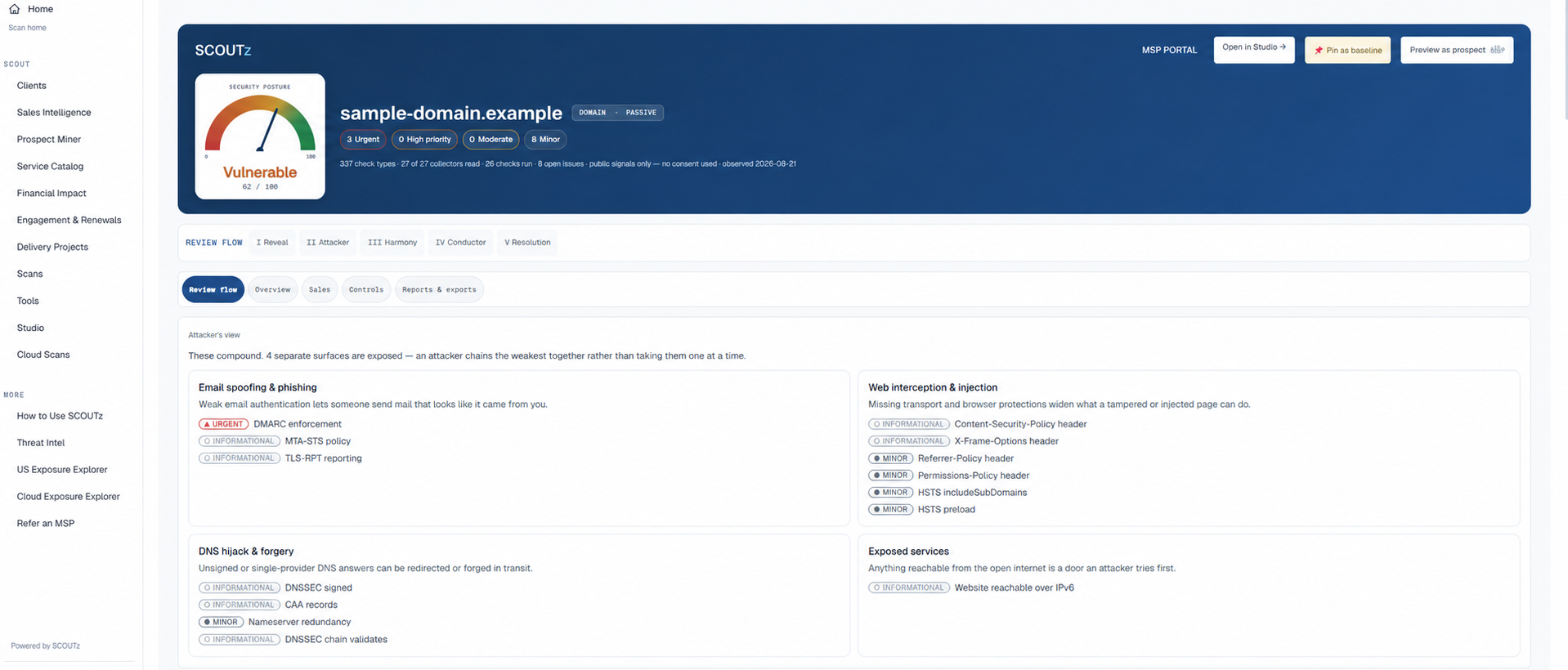
A vendor assessment begins with the capability a product provides. A client assessment begins with the organization, its evidence, unknowns, and desired outcomes before any product is selected.
Vendor assessments and client assessments can both be useful. They are not the same question.
A vendor assessment starts with a capability
It asks where the environment may need the capability a specific product provides. A backup vendor reviews recovery conditions. An email-security vendor reviews email controls. An AI-governance vendor reviews AI discovery and enforcement. The focus can produce valuable depth.
A client assessment starts with the organization
It asks what the client needs. That may involve identity, email, applications, recovery, endpoint protection, governance, operations, people, policy, or a combination that no single vendor owns.
The client view should describe the condition, evidence, affected object, unknowns, and desired outcome before selecting a product. It should also say which sources were unavailable and which conclusions remain dependent on customer or MSP attestation.
Know which promise is being made
Confusion begins when a focused vendor review is presented as a complete understanding of the client. The answer is not to dismiss specialist tools. It is to label the boundary and use each tool for the job it can support.
SCOUTz aspires to the client assessment. It gathers and organizes evidence across the supported boundary, then leaves the final architecture and vendor choice with the MSP. Depth still comes from specialist systems where the question requires it.