CRM manages the relationship, lead data identifies accounts and contacts, and MSP prospect intelligence explains why a specific technical and business conversation may matter now.
A CRM answers important questions: Who are they? Who talked to them? When is the next call? What stage is the opportunity in? What is the expected value?
A lead database answers a different set: What is the company called? How large is it? What industry is it in? Who might hold the relevant title? What contact information is available?
Neither category is failing. They are doing the jobs they were designed to do. The mistake is assuming those jobs add up to understanding the prospect.
What is MSP prospect intelligence?
MSP prospect intelligence should answer the questions that prepare a useful technical and commercial conversation: What does this company look like operationally? What changed recently? What can be observed from a legitimate public source? Which signals are current? What remains unknown? What might the evidence mean for an MSP? What should the seller ask next?
That last group is the difference. Lead data identifies an account. CRM manages the relationship. Prospect intelligence helps the MSP understand why the conversation may matter.
The record needs layers because the evidence is not equally strong. A public company announcement is a dated event. A SCOUTz domain finding is an observed external condition. A third-party intent signal is a reason to prioritize research, not proof that the company is shopping. An MSP opportunity hypothesis is an inference that still needs discovery.
Flatten those into one black-box score and the seller inherits a credibility problem. Keep the source, timestamp, entity match, confidence, and expiry attached, and the seller can use the signal responsibly.
What should the seller receive?
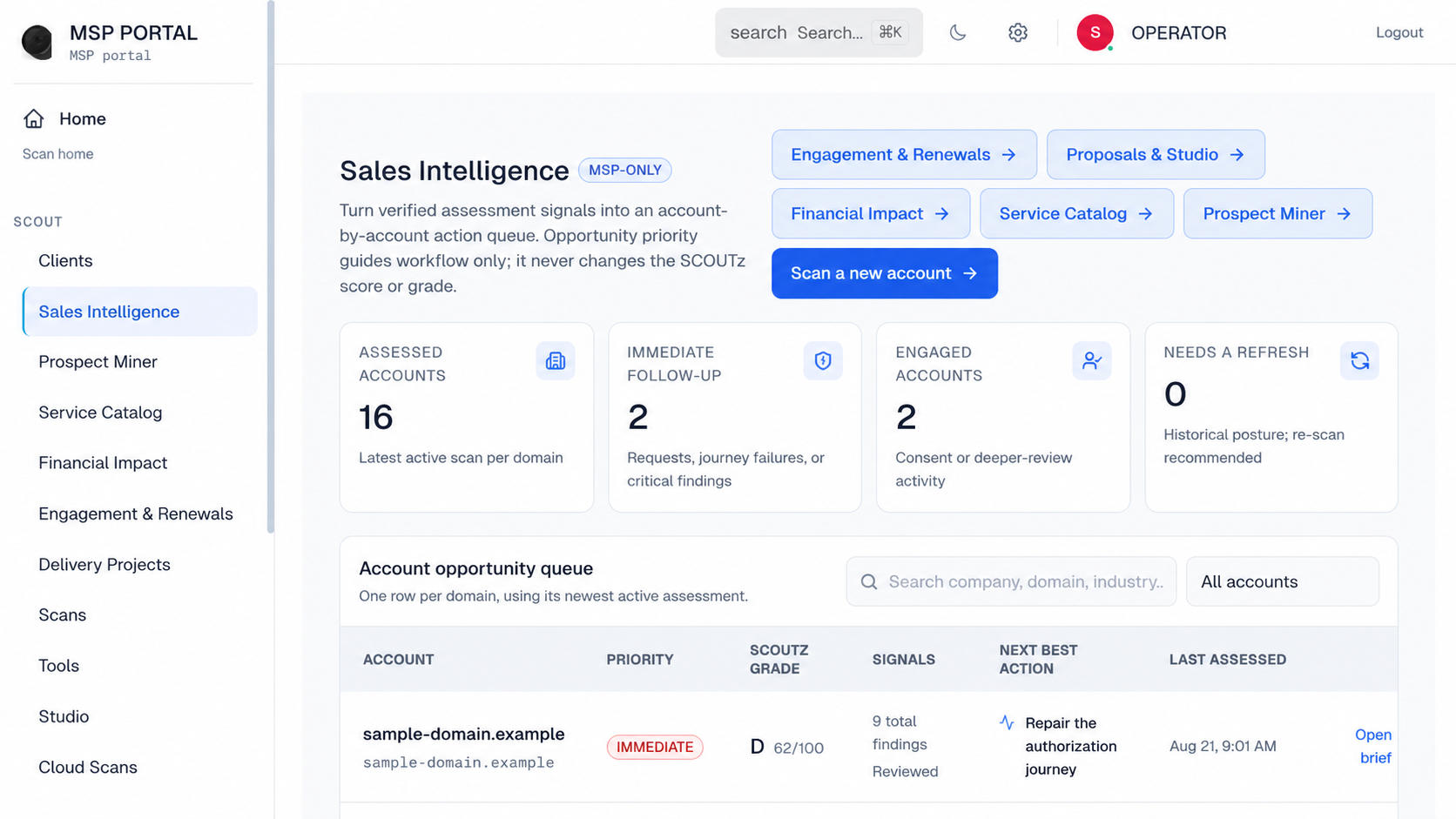
Not a dump of DNS records and not a contact card with a lightning bolt on it. The useful output is a brief: the reason to research now, the supporting sources, the observed condition, the business context, the personas likely to care, objections to expect, questions to ask, and a safe offer of value.
The product should also say what not to claim. “This company is shopping for an MSP” requires explicit first-party evidence. A job posting, funding event, or configuration gap does not establish purchase intent. It can establish relevance.
CRM remains the system of record for the relationship. Lead data remains useful for account and contact discovery. SCOUTz adds the missing inspection and interpretation layer between “we found the company” and “we know why a credible conversation is worth having.”
That is prospect intelligence. Everything else is a list with better lighting.